A Newsroom for Cheltenham: How We Could Build It — and Why It Matters

This is how to build a local newsroom for Cheltenham — at least one that covers township government, schools, and public affairs, for which there’s surprisingly little.
If you’ve lived in Cheltenham for a while, you know what I mean: drip, drip, drip. The slow attrition of local news.
Was this email forwarded to you? Did a colleague share this in Slack? Subscribe to Backstory & Strategy to get your own daily strategic insights for free.
Major stories? A blip, and then nothing. Rumors instead of facts. Quiet, opaque decision-making.
It’s not a happy state of affairs — and it doesn’t have to be this way.
Cheltenham could show the country that it’s possible for a small, well-run nonprofit newsroom to not just dip its toes into a community that’s lost consistent, high-quality local reporting, but to dive right in, make a splash, and stick around.
Here’s one way to do it.
Act 1: The Problem — From News Desert to News Drought
A little over a month ago, I wrote a piece called:
 Yoni Greenbaum
Spoiler alert: the answer was no. Not a news desert — but something very close: a news drought.
A place that gets a little coverage, but not nearly as much as it should.
Place names like Elkins Park and Wyncote get lost in a miasma of references to Mount Airy and the Main Line.
A year ago, “Elkins Park” was mentioned in local TV coverage just 25 times — out of a possible 25,000,000. That’s 25 times a year. Not 25 stories — just 25 brief mentions in passing.
The alternative? Facebook.
It’s great for missing pets and restaurant recommendations — and a horrible place to look for verified, in-depth reporting. For every page full of factual information, there are three filled with rumor, speculation, and garbled half-truths.
It’s a cycle that keeps repeating itself — and we know why: reporting is getting axed across the country, leaving communities like ours with less and less coverage of the stories and decisions that shape our lives.
Act 2: Why Cheltenham Is the Perfect Test Case
Cheltenham Township is the perfect place to show that a small, well-run nonprofit newsroom can bring consistent, high-quality local reporting back to a community that’s lost it.
In the coming acts, I’ll explain exactly how:
- The team we’d need
- How we’d pay for it
- How we’d know we’re making a difference
- What it could mean for our neighbors, our children, and our town
Cheltenham at a glance:
- Population: 38,460 residents (+ 11,000 daily commuters)
- Founded: 1682
- Historic listings: 13 on the National Register of Historic Places
- Schools: Strong public education system
- Neighborhoods: Distinct areas like Elkins Park, Wyncote, Glenside, and Melrose Park
We have the civic pride, resources, and community connections to support a newsroom built just for Cheltenham.
Right now, the kind of reporting that helps neighbors understand each other, keeps public officials accountable, and documents our shared history simply isn’t happening.
This is the gap we could fill.
Act 3: The Model — What This Newsroom Would Look Like
Year 1: A focused, local team whose only job is to cover Cheltenham — not the region, not the metro area, but the places and people you know.
Staffing:
- Editor-in-chief: Oversees the newsroom, assigns stories, edits them, keeps coverage fair and relevant
- Two full-time reporters: One focused on government and public affairs, the other on schools and community life
- Freelancers & photographers: For deeper reporting, special projects, and strong visuals
Budget:
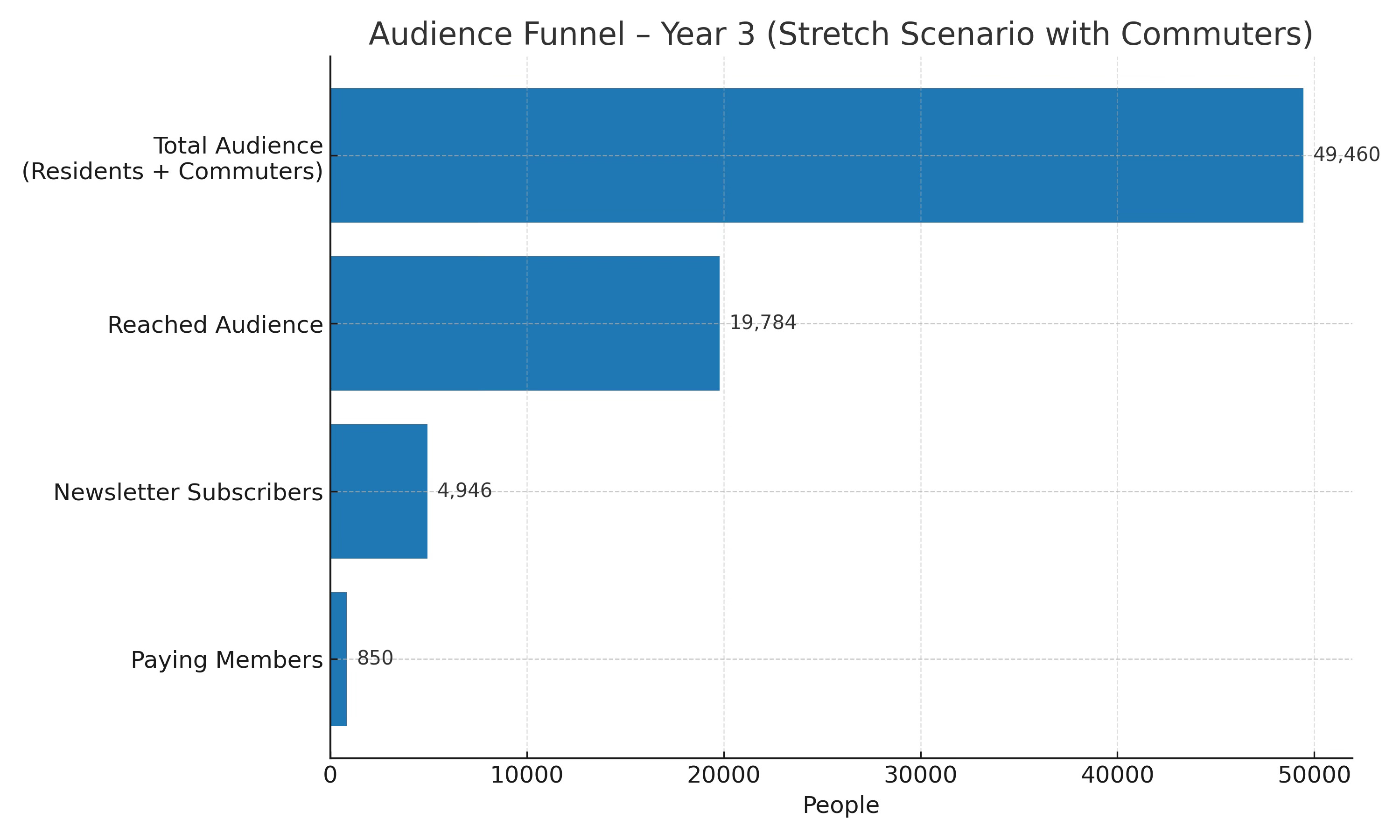
- Year 1: a little over $450,000 — most of it for people
- The rest for tech, marketing, field reporting, and a small cushion for the unexpected
Act 4: Innovation — How to Do More Without Burning Out
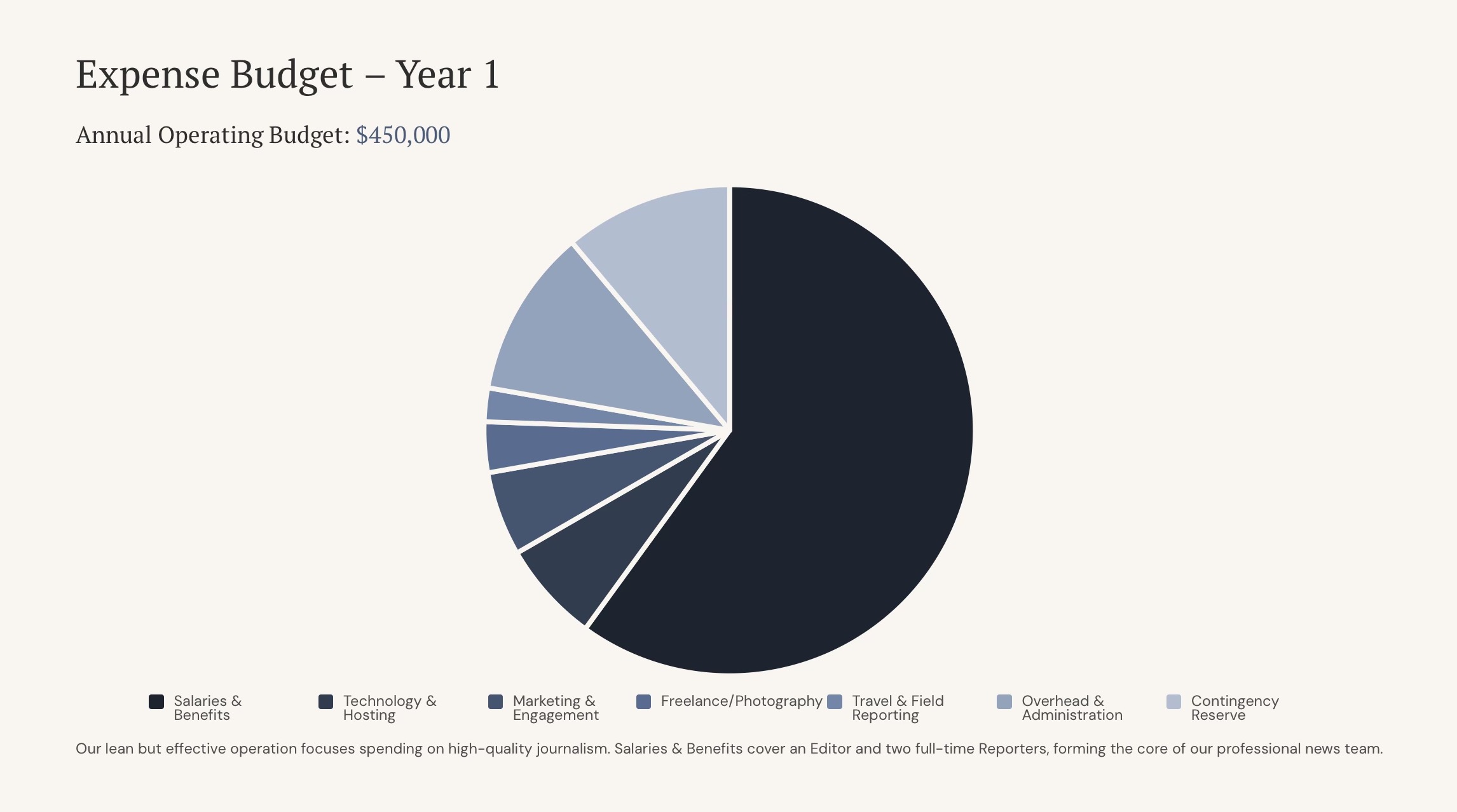
This isn’t about doing more with less. It’s about doing more with the same, thanks to AI.
How it works:
- Overnight, AI compiles public meeting minutes, zoning notices, and other public records
- The editor reviews in the morning, adds context, fact-checks, and decides what to publish
- Reporters spend more time on deeper stories — investigations, profiles, and reporting that needs a human touch
Act 5: From Readers to Members
We wouldn’t just publish stories and hope someone reads them. We’d build a community of readers who see this as their newsroom.
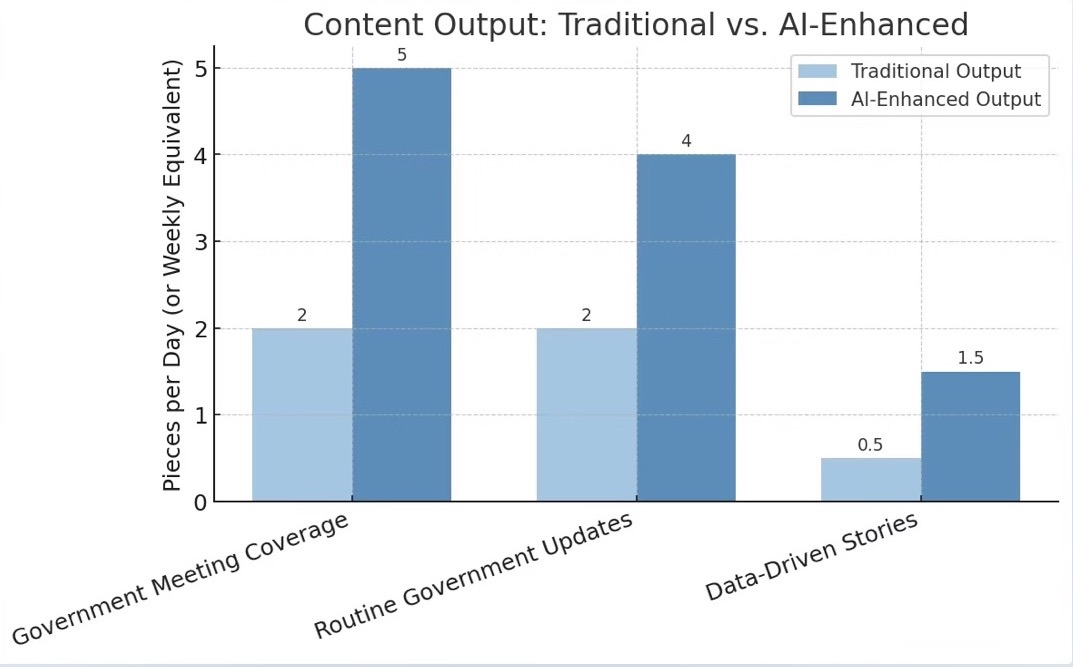
By Year 3 (stretch goal):
- Newsletter subscribers: ~5,000 (13% of residents)
- Daily readers: 2,500
- Weekly reach: 15,000 (including commuters)
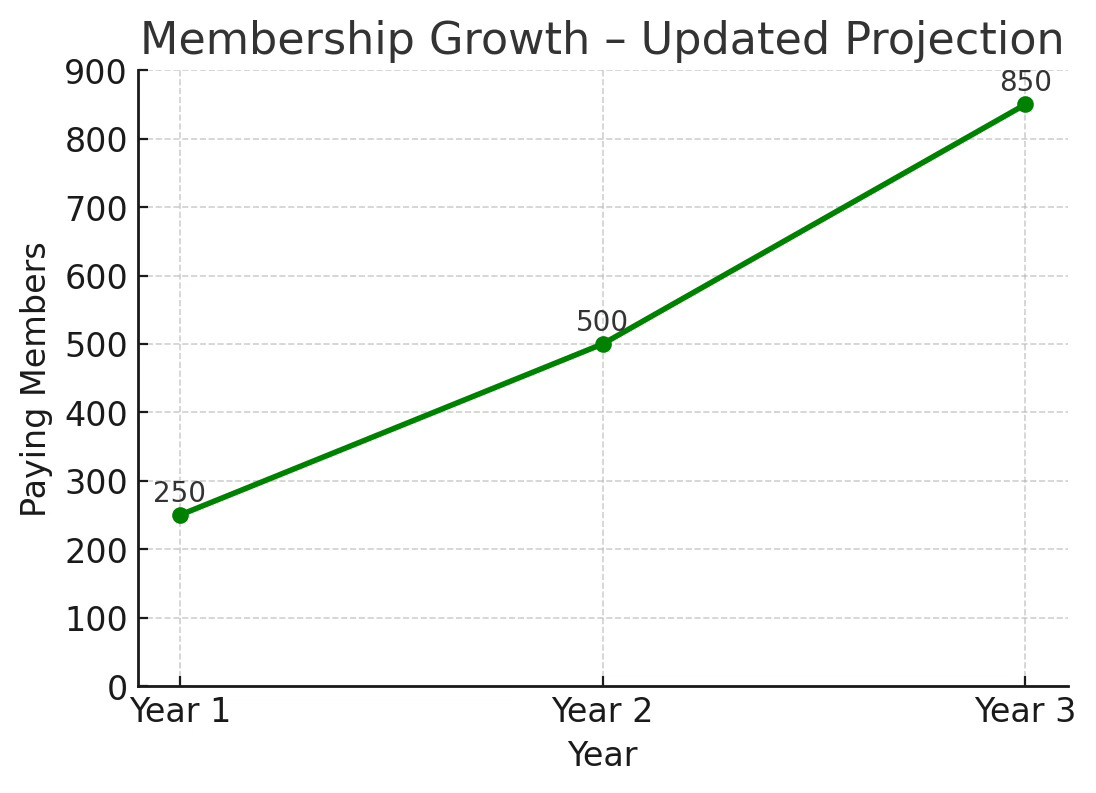
- Paying members: 850
Act 6: How We’d Pay for It
One funding source can’t carry a newsroom forever. From Day 1, this newsroom would have a healthy mix of revenue streams:
- Grants from national and local journalism funders
- Membership fees from residents and commuters
- Sponsorships & advertising from local businesses that want to reach our readers
- Major gifts from individuals and organizations that believe in the mission
- Earned revenue from events and other projects, like ticketed town halls or local guides
Financial projections:
- Conservative plan: Starts at $450,000 in Year 1 and grows to $750,000 by Year 3 — running a small deficit in Year 1 before breaking even in Year 2 and sustaining in Year 3.
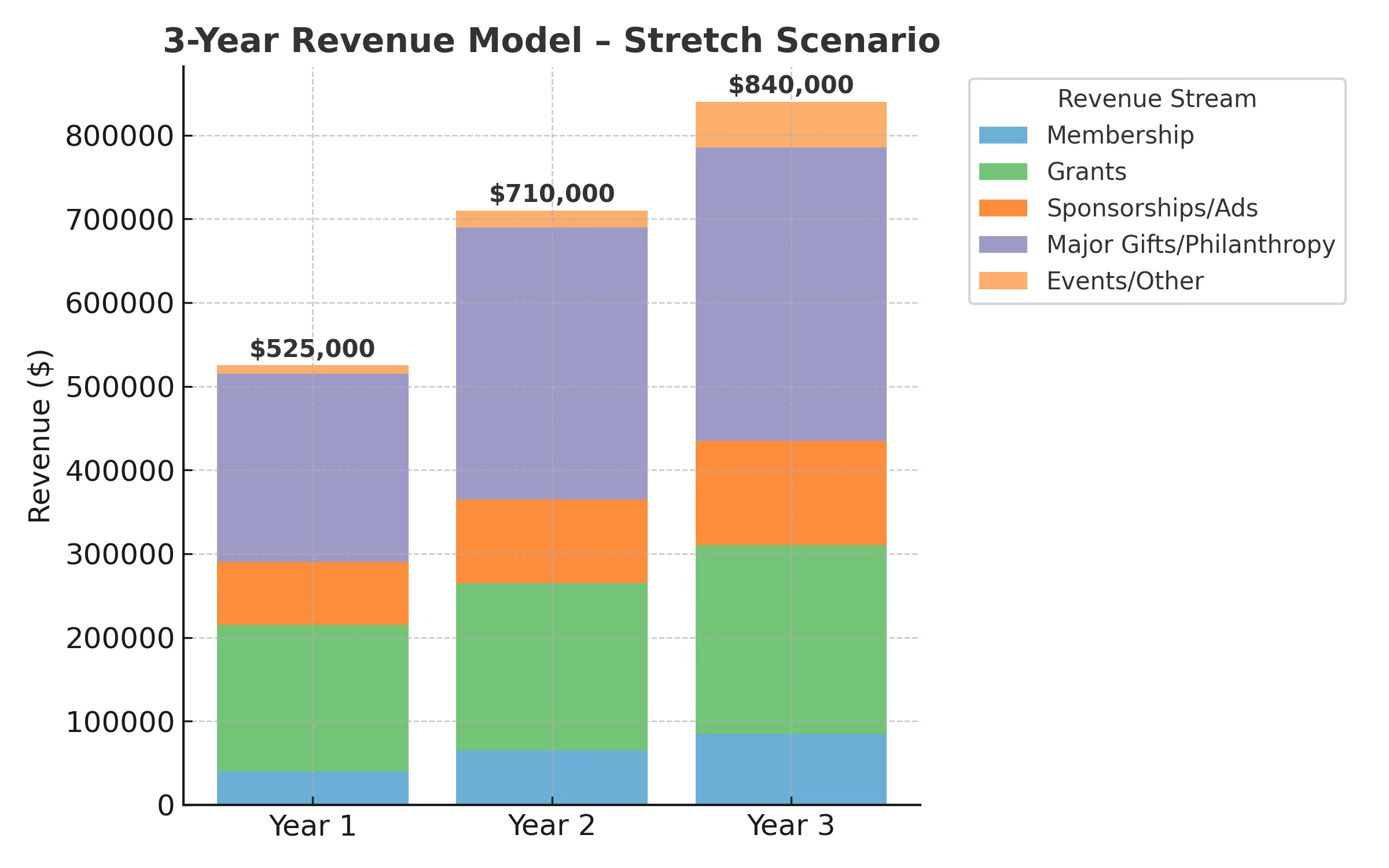
- Stretch plan: Starts at $525,000 in Year 1 and grows to $840,000 by Year 3 — with a smaller initial deficit, quicker breakeven, and more aggressive growth in Years 2 and 3.
Both models are sustainable by the end of the three-year period and avoid overreliance on any single funding source. The stretch scenario simply reaches stability faster and with greater capacity for reinvestment
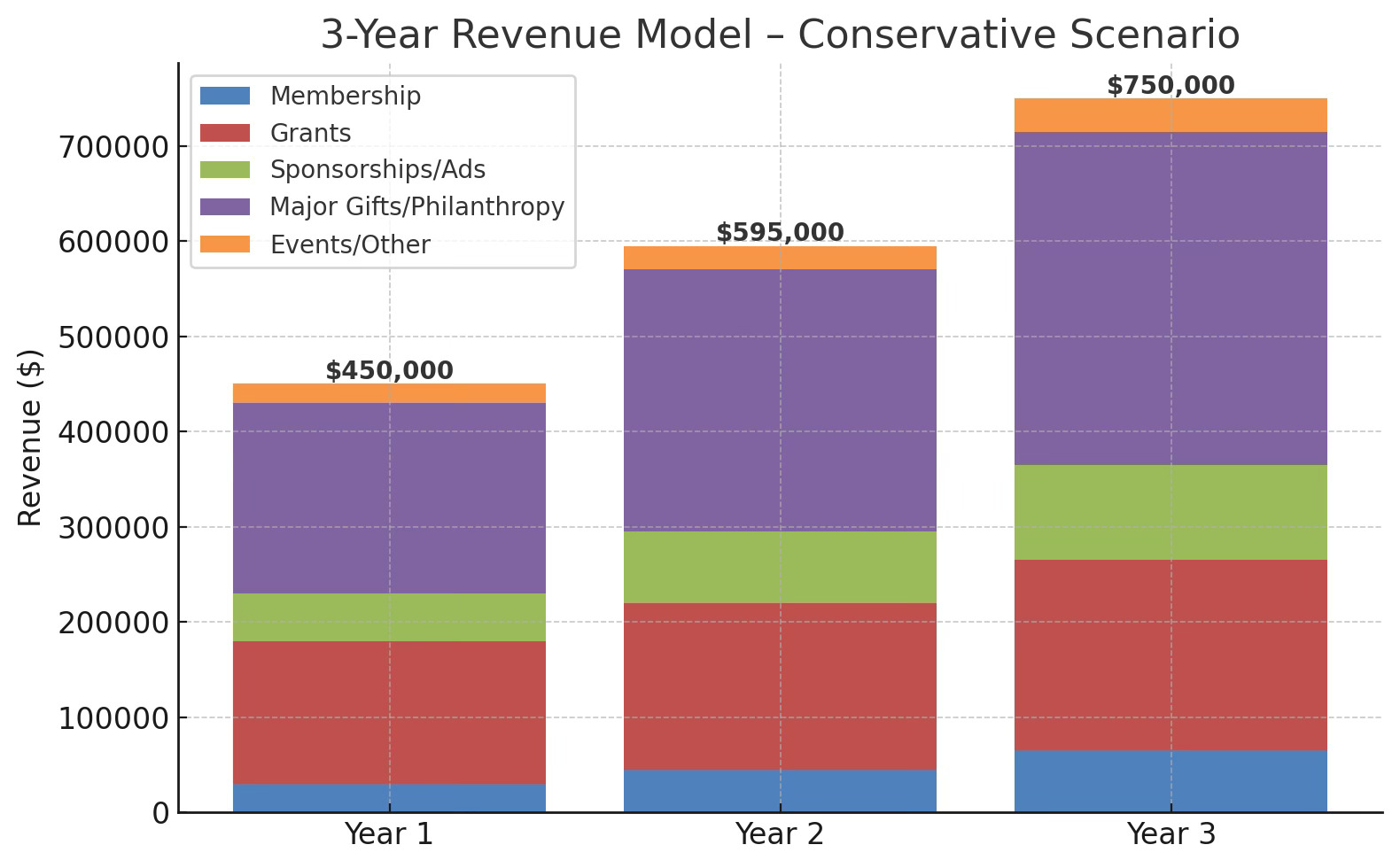
Two funding paths: both sustainable, one more ambitious with fundraising and grants
Act 7: Proving It’s Worth the Investment
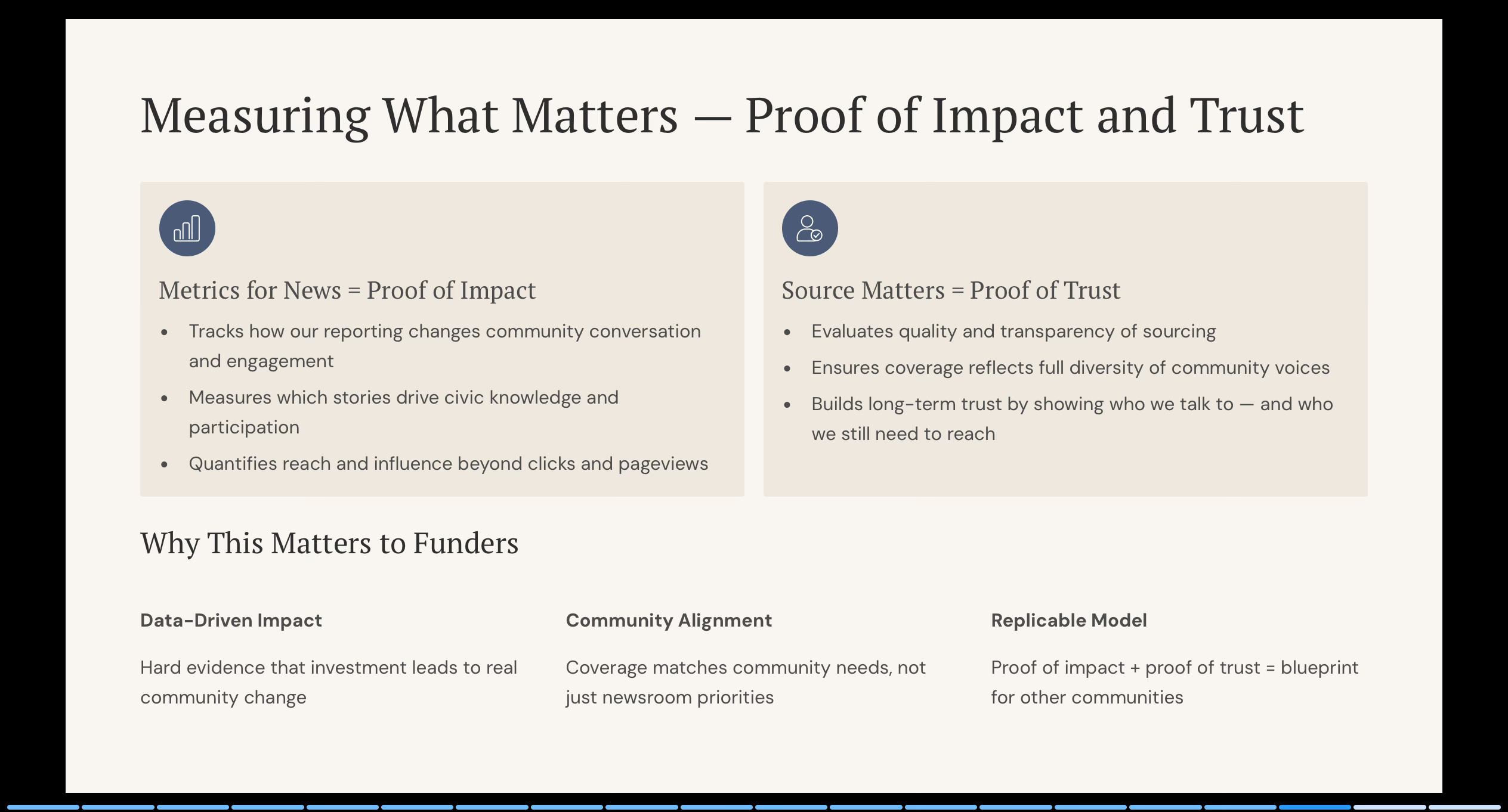
We’d measure impact and trust.
- Metrics for News: Tracks whether our reporting changes community conversations or spurs action
- Source Matters: Ensures diverse voices are included, not just the usual officials and spokespeople
Act 8: The Long Game — A Model for Other Communities
By Year 3, we could expand into beats like arts, environment, and youth sports — or share the model with other communities facing similar news droughts.
Because this isn’t just about Cheltenham. It’s about showing that when a community values local news enough to build it, that news can thrive.
Final Thought:
Launching a nonprofit newsroom takes work, money, time, and a core group of people willing to commit to building it and making it part of their lives.
This is one way to do it. The numbers here aren’t guesses, they’re based on industry research, local media interviews, and best practices from similar communities.
If you want more detail, I’m happy to provide it. And if you’re interested in helping fund or launch this in Cheltenham, let’s talk.
The only thing more expensive than building local news is letting the drought get worse.
PS - If you found this post helpful, would you please consider restacking it and sharing it with your audience?
This spreads the word and keeps me writing the types of content that you have enjoyed.