The White House Just Proved My Point About Public Media's Existential Crisis
Author’s Note (2025): This post focuses on the consequences of funding decisions for public media’s ability to serve communities — not on politics or policy debates. I wrote it from the perspective of someone who has worked to sustain public media’s educational and civic mission.
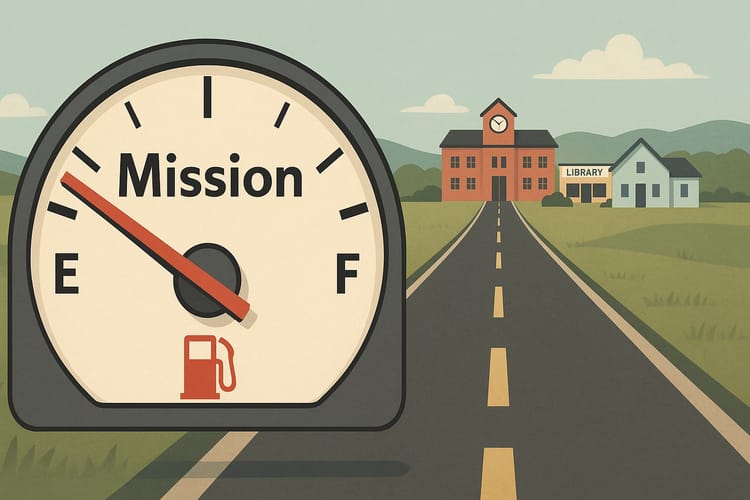
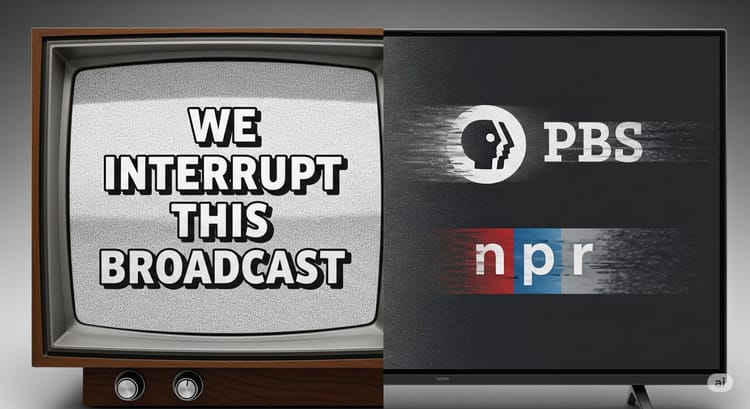
Yesterday's White House memorandum asking Congress to claw back $770 million in public broadcasting funds wasn't just a budget cut—it was a confirmation of everything I've been arguing about the precarious state of public media and its critical role in STEM education.
The Numbers Tell the Story
Katherine Maher's response as NPR's CEO laid out the stark reality: this rescission would eliminate funding for more than 1,000 station signals, force dozens of local stations to close, and gut the local news economy in communities already stripped of traditional journalism. But here's what caught my attention as someone who's been tracking public media's educational mission—96% of all classical music broadcast in the country appears on public radio. When those stations go dark, we don't just lose news. We lose the cultural and educational programming that makes STEM concepts accessible through music, nature documentaries, and science programming.
Thanks for reading Backstory & Strategy! Subscribe for free to receive new posts and support my work.
Beyond the Politics: What We Actually Lose
PBS's Paula Kerger emphasized the rural and small-market impact, but the educational implications run deeper. Public media has become the de facto STEM education infrastructure for millions of Americans—from PBS Kids' coding games to NPR's science coverage to local stations' emergency alert systems that demonstrate real-time technology applications.
The emergency alert angle that Maher highlighted is particularly telling. NPR operates the Public Radio Satellite System that distributes Presidential-level emergency alerts nationwide within minutes. Twenty states specifically name NPR/PRSS in their emergency plans. This isn't just about funding—it's about maintaining the technological backbone that teaches communities how information systems work during crises.
The Local News Connection
Here's where my original thesis about STEM education threats intersects with current reality: public media has stepped into the gap left by collapsed local newspapers, hiring 3,000 local journalists over the past decade. These aren't just reporters—they're often the only people in their communities explaining complex scientific and technological issues, from climate change impacts to broadband infrastructure to public health data.
When Maher points out that "private media corporations have already demonstrated they are not willing to step into the gap," she's describing exactly what I warned about—the market failure that leaves communities without the educational resources they need to understand an increasingly technical world.
What the Responses Reveal
Both Kerger and Maher are framing this as a rural versus urban issue, emphasizing the "small stations that rely on federal funding for a larger portion of their budgets." But they're underselling the broader educational argument. This funding supports the only media infrastructure many Americans have for sustained, in-depth coverage of scientific and technological issues.
The classical music angle Maher raises is more strategic than it might appear. Classical programming often includes educational content about acoustics, mathematics in music, and the technology behind recording and broadcasting. Lose that programming, and you lose informal STEM education opportunities that reach audiences traditional educational institutions never touch.
The Constitutional Gambit
Maher's statement that the rescission "violates the Public Broadcasting Act, the First Amendment, and the Due Process Clause" suggests NPR is preparing for a legal fight. But constitutional challenges take years, and stations can't wait that long for funding. This creates exactly the uncertainty I've been tracking—institutions forced to make short-term survival decisions that compromise their long-term educational mission.
What This Means Going Forward
The rescission proposal crystallizes the choice facing public media: double down on local service and educational programming, or pivot toward content that might attract private funding but abandons the communities most dependent on public broadcasting for STEM education access.
If Congress approves this clawback, we'll see in real time whether my thesis holds—that eliminating public media infrastructure creates educational deserts that private markets won't fill. The communities that lose their public radio and TV stations won't just lose news and entertainment. They'll lose their primary source of accessible, sustained coverage of scientific and technological issues that affect their daily lives.
The question isn't whether public media deserves funding. It's whether we're willing to maintain the educational infrastructure that helps American communities understand and engage with an increasingly complex technological world.
The rescission vote will be a defining moment. Representatives who claim to support rural communities and educational access will have to choose between political posturing and the infrastructure their constituents actually depend on. Pay attention to how yours votes—it's the clearest signal you'll get about whether they understand what's at stake beyond the partisan talking points.
What do you think happens next? Will Congress prioritize short-term budget optics over long-term educational infrastructure? And if your local public media goes dark, what fills that gap in your community?
Comment and tell me what you're seeing in your area—I'm tracking how this plays out across different markets and would love to hear your perspective.
If this analysis was useful, share it with someone who needs to understand what's really at stake in this fight.