Where Do Stories Come From? A Peek Behind the Newsroom Curtain
When people hear I work in the news business, the question I get more than any other is:
“Where do you find all those stories?”
Fair. Before I got into the industry, I wondered the same thing.
The short answer: it depends on the newsroom.
Was this email forwarded to you? Did a colleague share this in Slack? Subscribe to Backstory & Strategy to get your own daily strategic insights for free.
The Assignment Desk: News at Full Tilt
My first taste of TV news came at NBCUniversal, running digital at NBC10 and Telemundo 62. Having spent years in newspapers, I figured it couldn’t be that different.
It was.
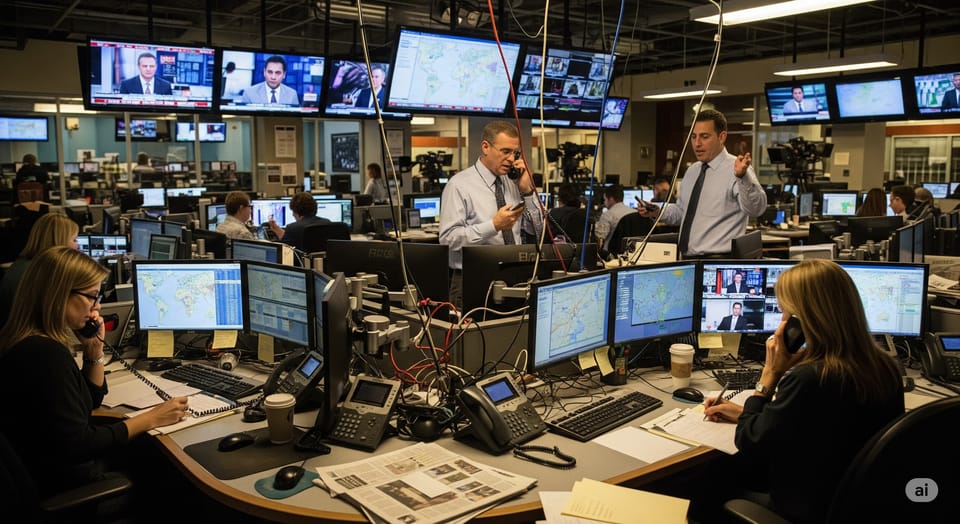
TV assignment desks are wild places. The editors who run them may work for for‑profit companies, but most are as mission‑driven as you’ll ever meet. Their goal? Simple: make the station #1. Beat the competition. Own the story.
They’re the ones answering calls from viewers and tipsters, digging through a flood of emails, faxes, and PR pitches, and, when breaking news hits, becoming the newsroom’s lifeline. While reporters are scrambling in the field, assignment editors are working the phones, pulling the puzzle pieces together.
I can still hear it: an editor shouting across the newsroom, “I’ve got a witness on the phone!” That wasn’t just background noise. That was the difference between leading the newscast and playing catch‑up.
 Yoni Greenbaum
The Weekbook: Order Out of Chaos
Newspapers play a different game. Reporters usually have beats, a city, a county, the courts, business, and education. Which means they’re not just reacting; they’re expected to plan.
Enter the dreaded “weekbook” (or its big sibling, the “monthbook”).
New reporters hated it. Who wants to spell out for their manager exactly what they’ll be covering over the next four weeks? But here’s the truth: without it, chaos wins.
On a geographic beat, structure is everything. You know the government rhythm: council meetings, school boards, zoning hearings. Each one can generate a preview, live coverage, and follow‑ups. Add in enterprise projects you don’t want slipping through the cracks, plus the weekend stories editors depend on to fill out the paper, and suddenly the weekbook stops looking like busywork. It looks like survival.
The smart reporters got it. They used the weekbook as a tool, a way to stay productive, stay ahead on their beat, and, frankly, keep from losing their minds. Done well, those calendars didn’t just cover the news. They shaped it. More than once, a solid weekbook turned into the reason a newsroom broke a story instead of chasing one.
 Yoni Greenbaum
The Candy Machine Surprise
And then there are the stories you never see coming.
In 1998, I was leaving a supermarket in Clifton, New Jersey, when a row of candy machines caught my eye. Inside one of those little plastic capsules? Two‑inch figurines called Homies, Chicano Mexican American characters with more personality than most TV shows.
I probably looked ridiculous, standing there feeding in quarter after quarter until I had a growing collection. There were dozens in the series, each with its own backstory. A few that stuck with me:
Eight Ball — low‑slung beanie, big grin, numbers painted on his shoes.
Smiley — perpetually broke mechanic, always borrowing from friends.
Big Loco — youth gang counselor turned arbitrator.
And that was just scratching the surface.
Back in the newsroom of the North Jersey Herald News, I showed the haul to one of our reporters. They ran with it, and what came out was a fascinating, unexpected feature, the kind that grabs readers by the collar.
That moment turned into part of my coaching playbook:
If something makes you pause, if it makes you say “huh,” it’s worth chasing.
Because the truth is, journalism isn’t only about the planned and the expected. It’s about curiosity. About trusting that if it catches your attention, chances are it’ll matter to someone else too.
PS - If you found this post helpful, would you please consider restacking it and sharing it with your audience?
This spreads the word and keeps me writing the types of content that you have enjoyed.